App Onboarding

6 min read

App Onboarding

6 min read

App Onboarding

App Onboarding

Overview

At the Financial Times, I explored how onboarding could become more than a short welcome flow and instead play a bigger role in retention.

While many users completed sign-up or downloaded the app, fewer than expected became regular, engaged readers. Most onboarding experiences focused on introducing features or guiding users through their first session, but did not help people experience real value early or build lasting habits.

This project reframed onboarding as the beginning of an ongoing relationship between the user and the product, rather than a one-off interaction.


The Challenge

For subscription products, the most valuable users are those who return regularly and make the product part of their routine.

However, many onboarding journeys are still built around short-term metrics such as completion rates, clicks, or preference setup.

The opportunity at the FT was to rethink onboarding around more meaningful outcomes. This meant helping users get value quickly, return more often, and build habits that increase retention over time.

The challenge was understanding why some users became regular readers while others dropped off after only a few sessions, and how onboarding could better support that journey.


My Role

As a Senior Product Designer, I led the discovery and strategic direction of the project.

My role focused on combining user research, competitor insight, and internal knowledge to define a clearer onboarding approach that could scale across FT products.


Research and Discovery

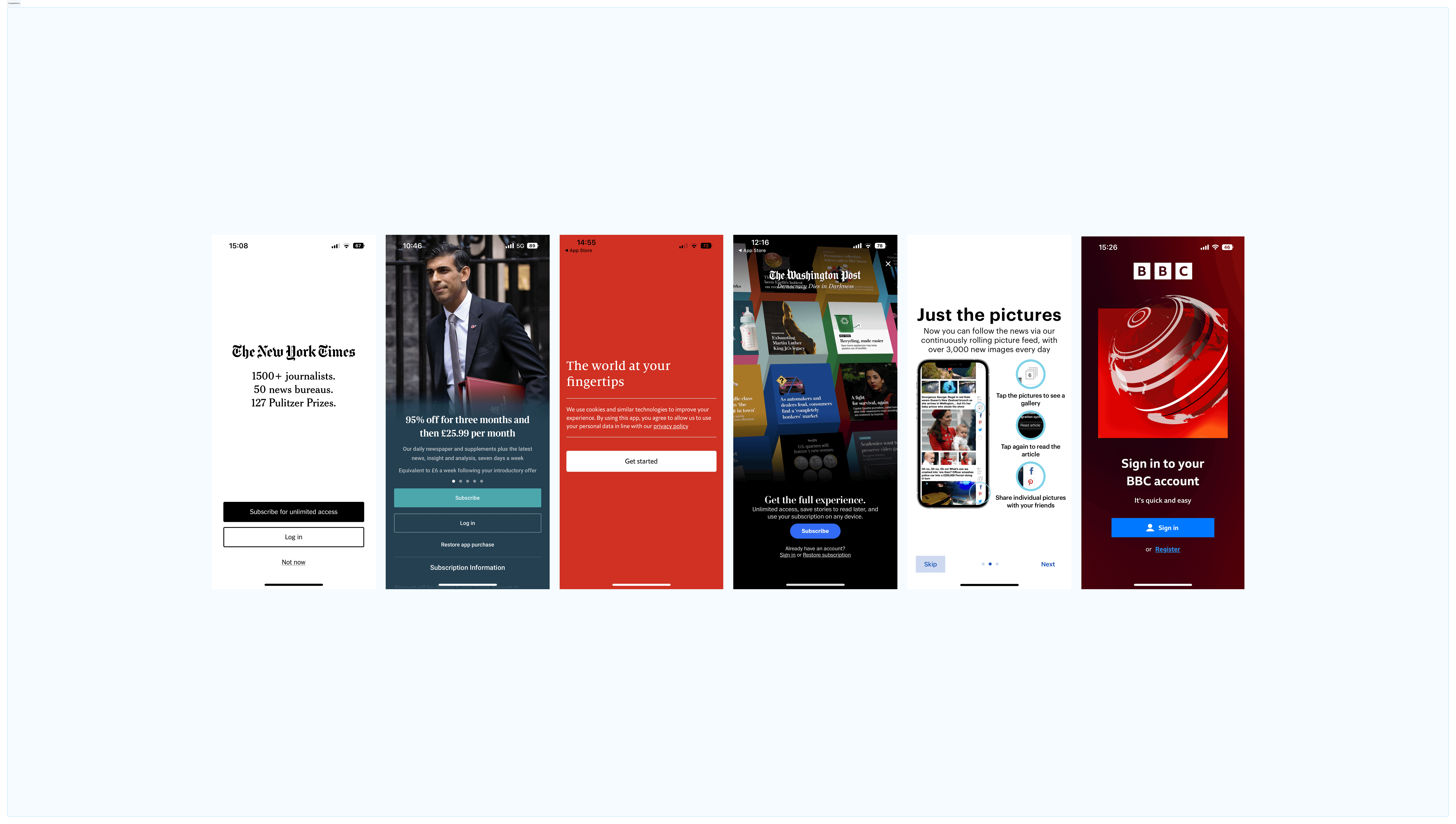
I reviewed interviews with users and prospects to understand why they subscribed, what they expected, and what happened during their first interactions with the product.

Many users arrived with strong intent. They wanted to stay informed professionally, improve their financial knowledge, follow global events, or access trusted journalism. However, the product experience did not always reinforce that motivation quickly enough.

Users often wanted clearer direction on where to begin, what content was most relevant, and how to get immediate value from their subscription.

For lighter users, the breadth of FT content could feel overwhelming. While depth and quality were clear strengths, some users struggled to know where to start or how to build a regular reading habit.

There was also an expectation that the product would feel smarter from day one, guiding users toward relevant content rather than leaving them to navigate alone.

I also ran sessions with teams across subscriber engagement, customer care, marketing, B2B, FT Edit, and growth.

Each team viewed onboarding differently. Growth teams focused on first-session actions and conversion. Engagement teams prioritised repeat visits and reading frequency. Customer teams highlighted friction points and support issues.

This led to fragmented experiences and inconsistent definitions of success.


Key Insights

Users do not become loyal through explanation alone. They become loyal through repeated value.

The aha moment varied between users. For some, it was discovering relevant market coverage. For others, it was setting up newsletters or building a daily reading habit.

Motivation was strongest immediately after sign-up but dropped quickly if not supported. This made the first few sessions critical.

Onboarding also extended beyond the app. Email, push notifications, recommendations, and support touchpoints all influenced whether a new subscriber became active.


Design Approach

I developed a three-stage onboarding model.

Activation focused on helping users experience meaningful value quickly through relevant content and clear next steps.

Habit formation focused on encouraging repeat behaviour through reminders, continuity, and routine building.

Expansion focused on introducing deeper features such as newsletters, audio, and personalisation once regular usage had been established.


Wireframing and Iteration

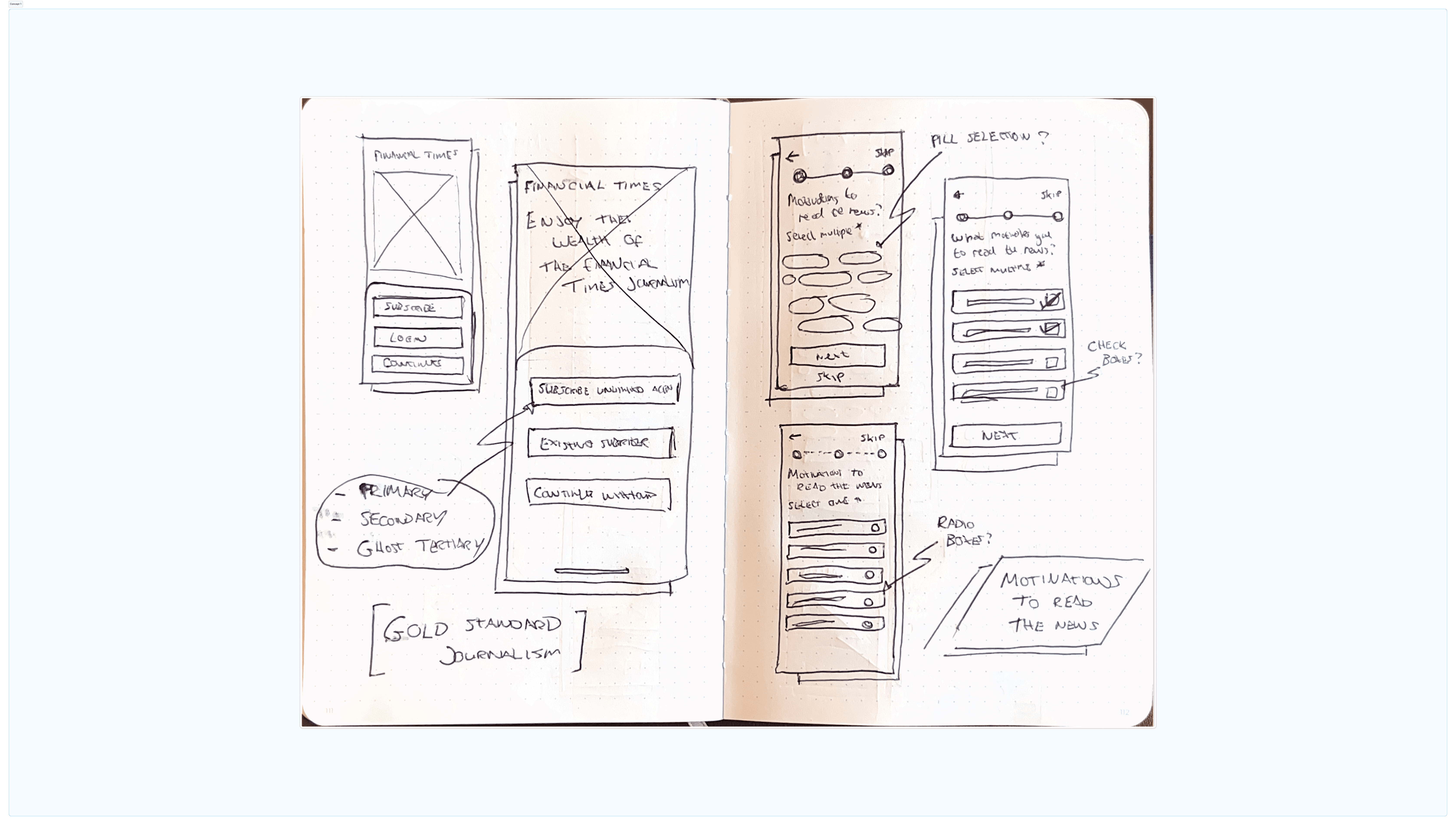
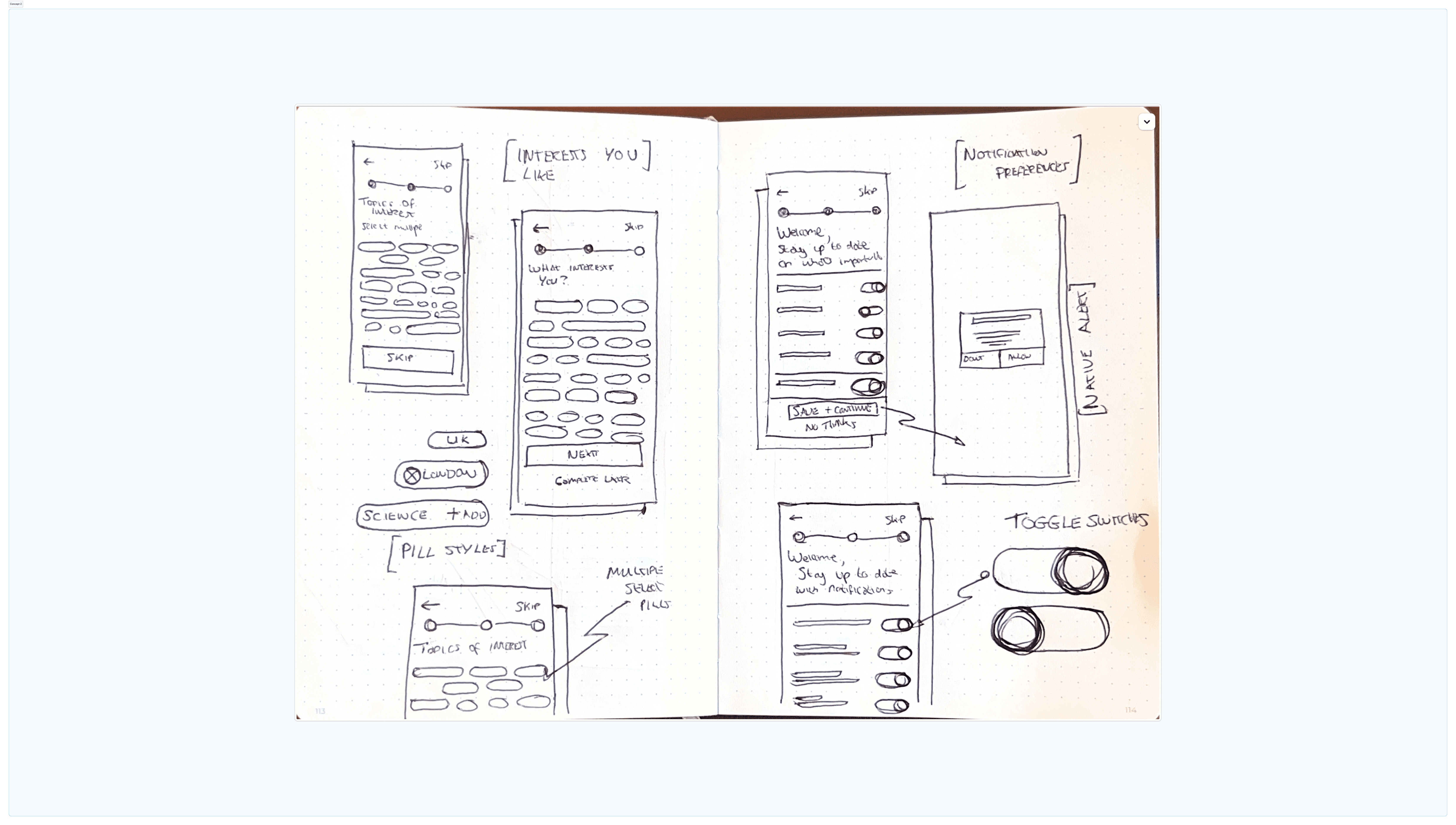
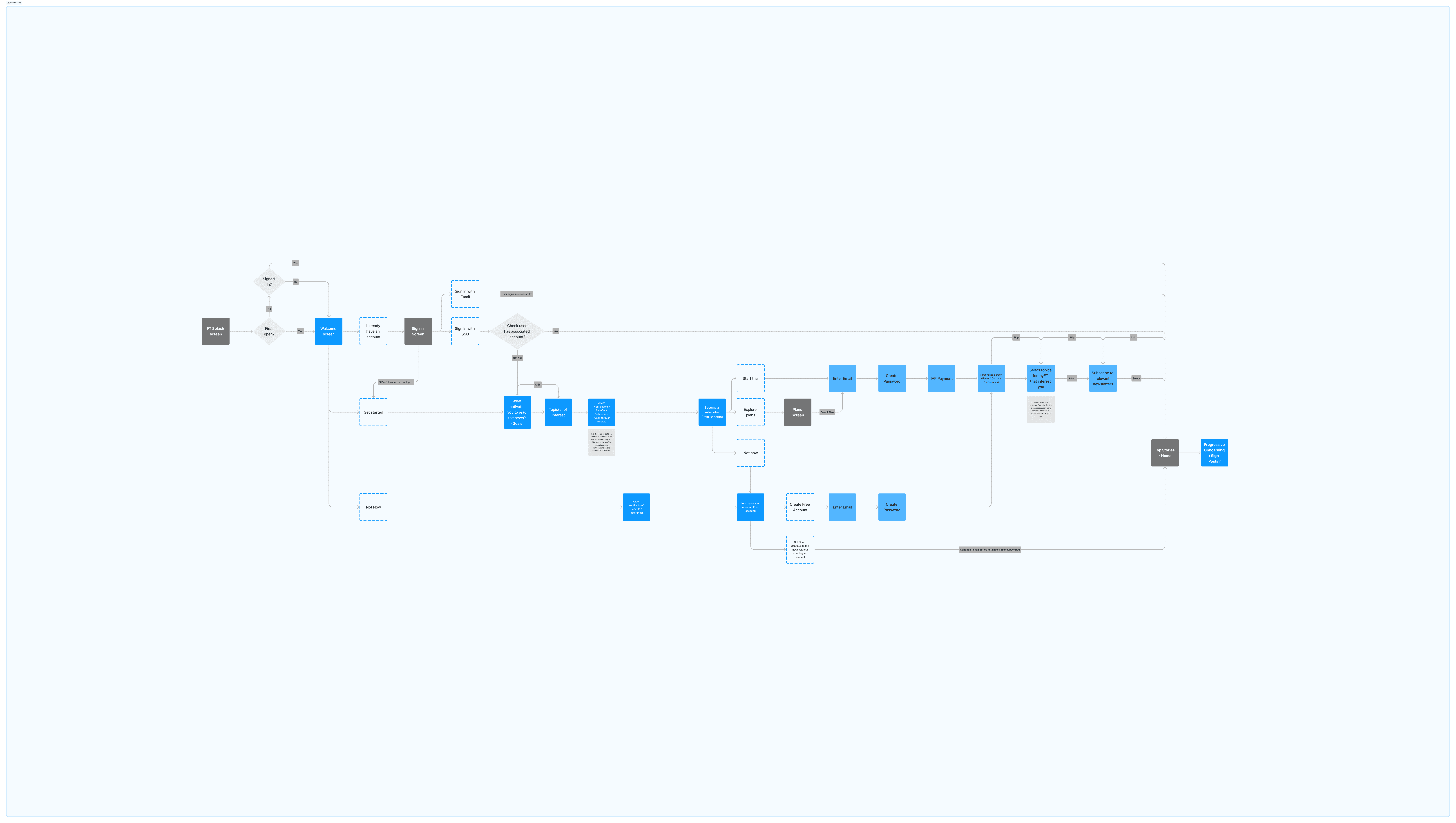
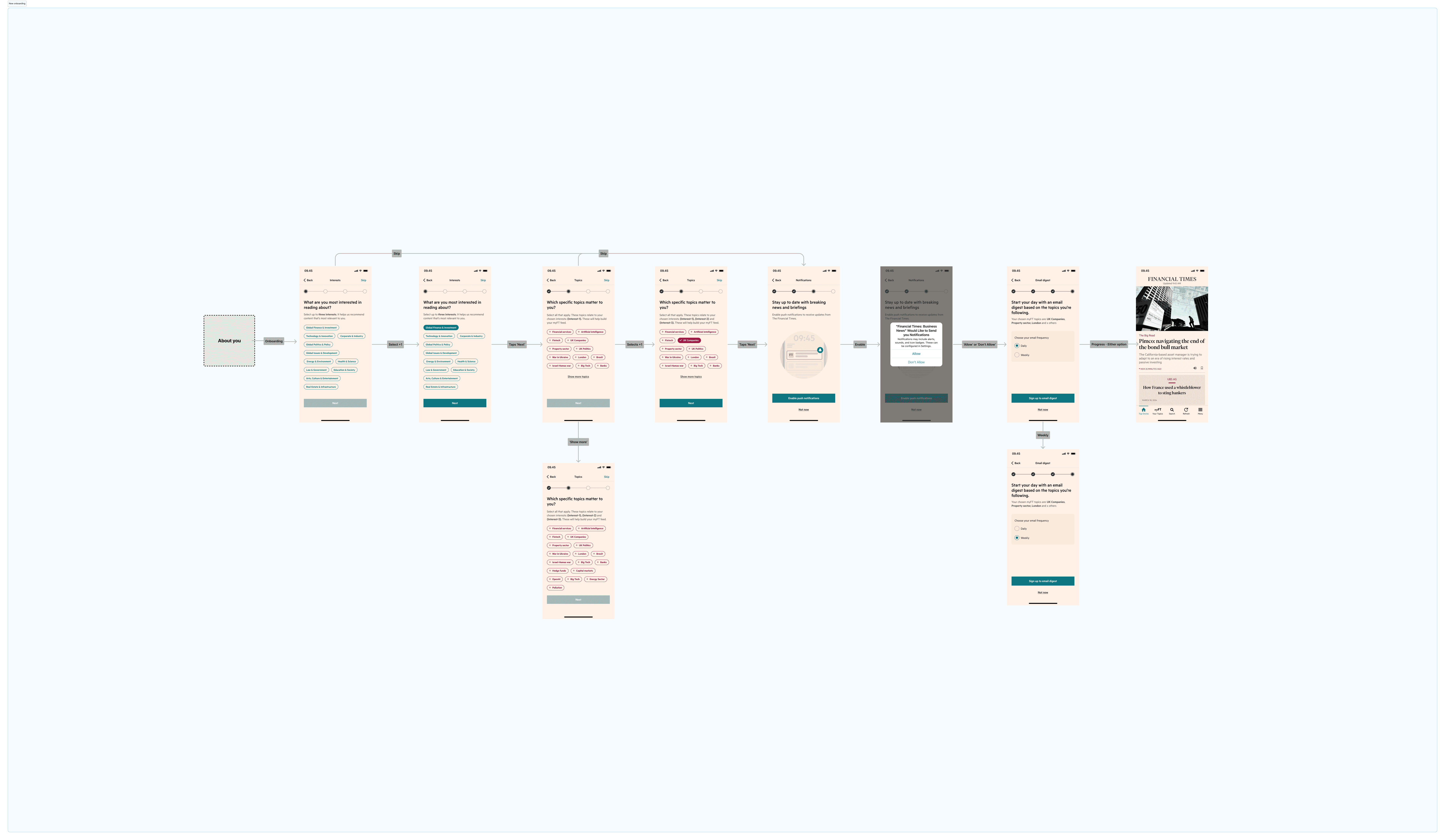
I translated the strategy into early wireframes to test how onboarding could work in practice.

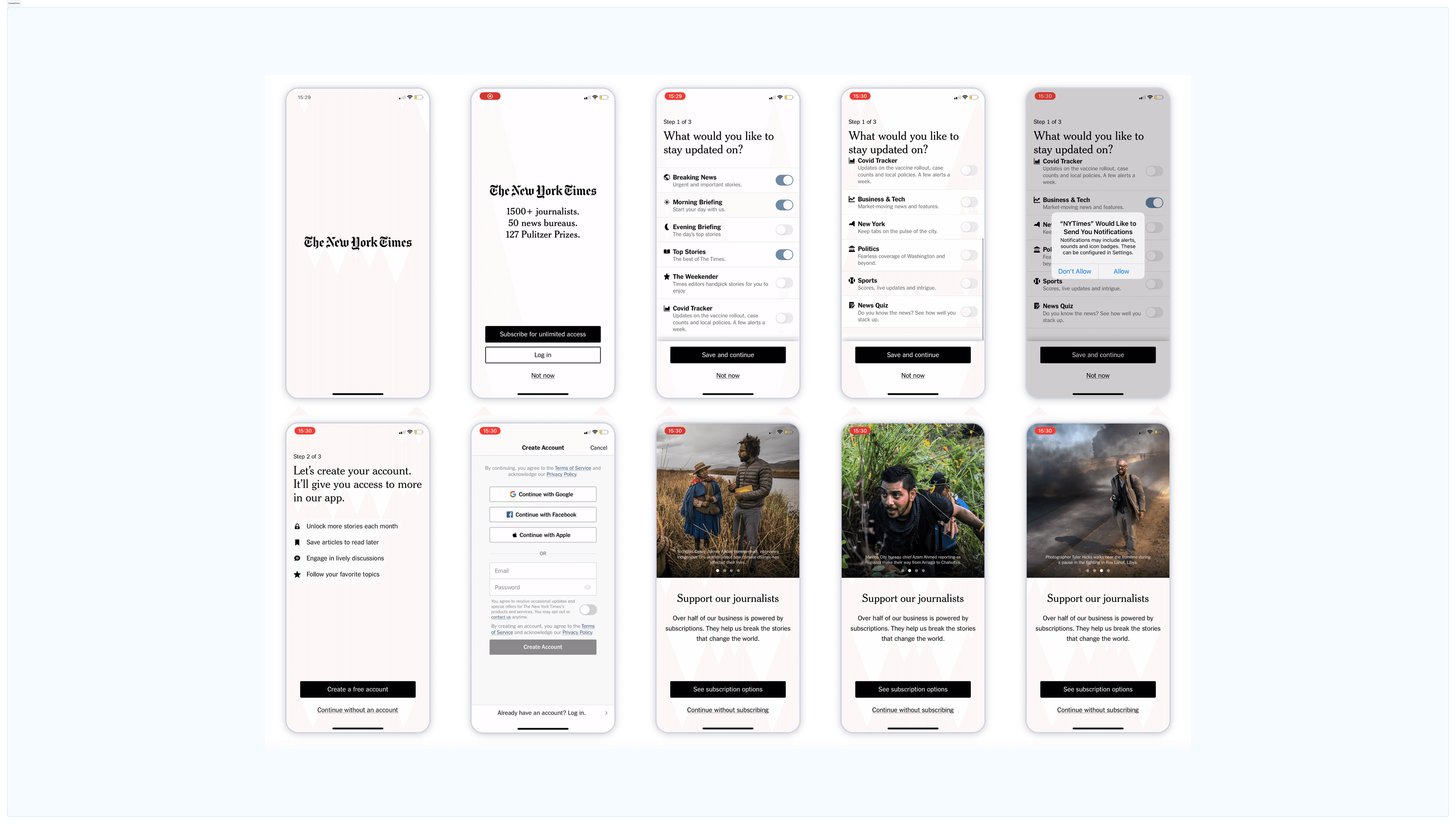
This included first-session journeys, topic selection, personalised content setup, and contextual prompts designed to introduce value without overwhelming users.

I also explored secondary onboarding flows to re-engage users after sign-up. These included reminders, progress-based prompts, and behaviour-driven content suggestions.

Wireframing helped align stakeholders around practical solutions and identify where onboarding should feel lightweight, where guidance was needed, and where personalisation added the most value.

The direction moved away from static feature tours toward more adaptive journeys that responded to user intent over time.


Concept Directions

Key directions included progressive onboarding, where guidance appears contextually rather than upfront.

Personalised journeys allowed onboarding to adapt based on user intent, interests, and acquisition source.

Onboarding was also treated as an omnichannel experience, extending beyond the app into email, push notifications, and support touchpoints.


Outcome

The project helped shift onboarding from a tactical flow to a strategic system for driving engagement and retention.

Compared with the previous experience, the proposed journey was designed to create stronger early engagement and clearer pathways to value.

Expected impact included 22 percent increase in first-week return visits, 28 percent increase in activation milestone completion, 31 percent increase in topic, newsletter, or preference setup, 18 percent increase in content consumed in the first seven days, 14 percent reduction in 30-day churn risk, and 20 percent increase in discovery of high-value features.

The key improvement was moving from a one-size-fits-all flow to a more personalised and progressive journey that encouraged habit building and earlier value.


Impact as a Designer

This project demonstrates my ability to work through complex product challenges and turn research into clear direction.

Rather than redesigning individual screens, I helped reframe onboarding as a system that improves retention, perceived value, and long-term engagement.

My Role

Duration and date

2 Months

Oct 2025 - Jan 2026

Duration and date

2 Months

Oct 2025 - Jan 2026